
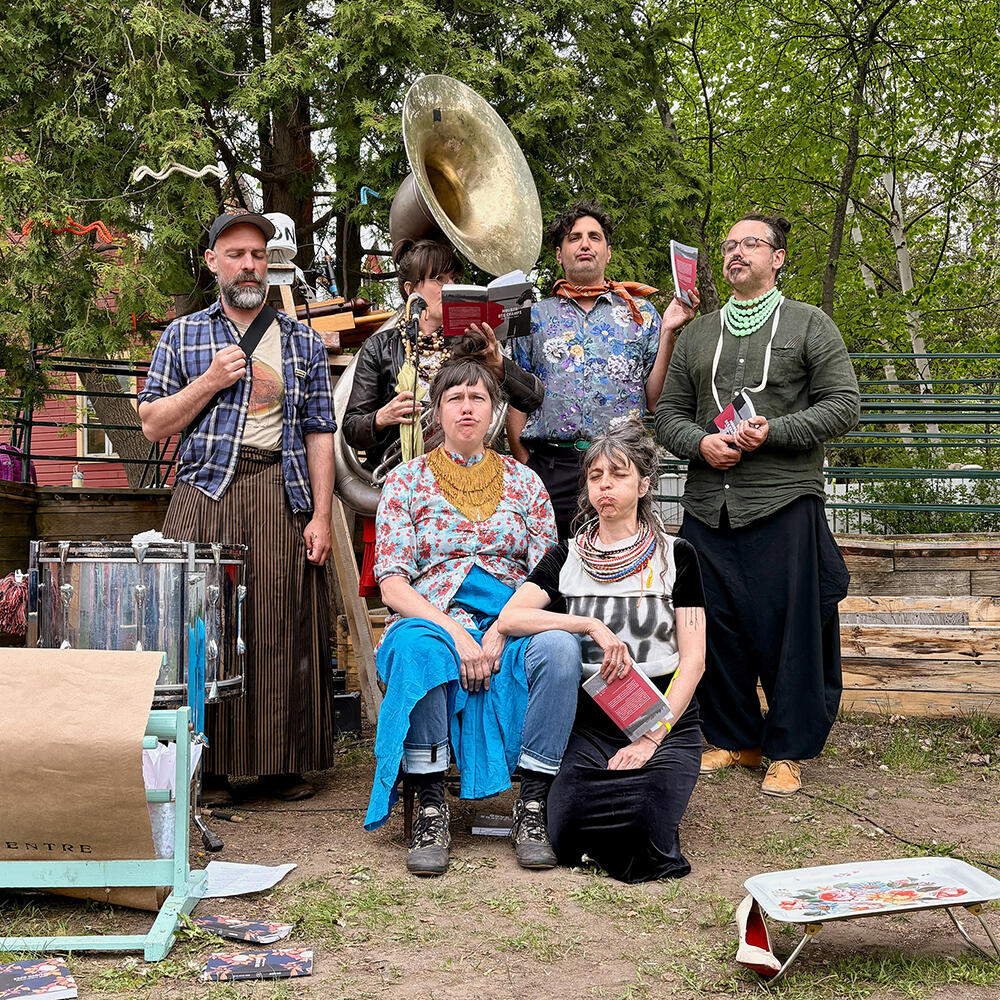
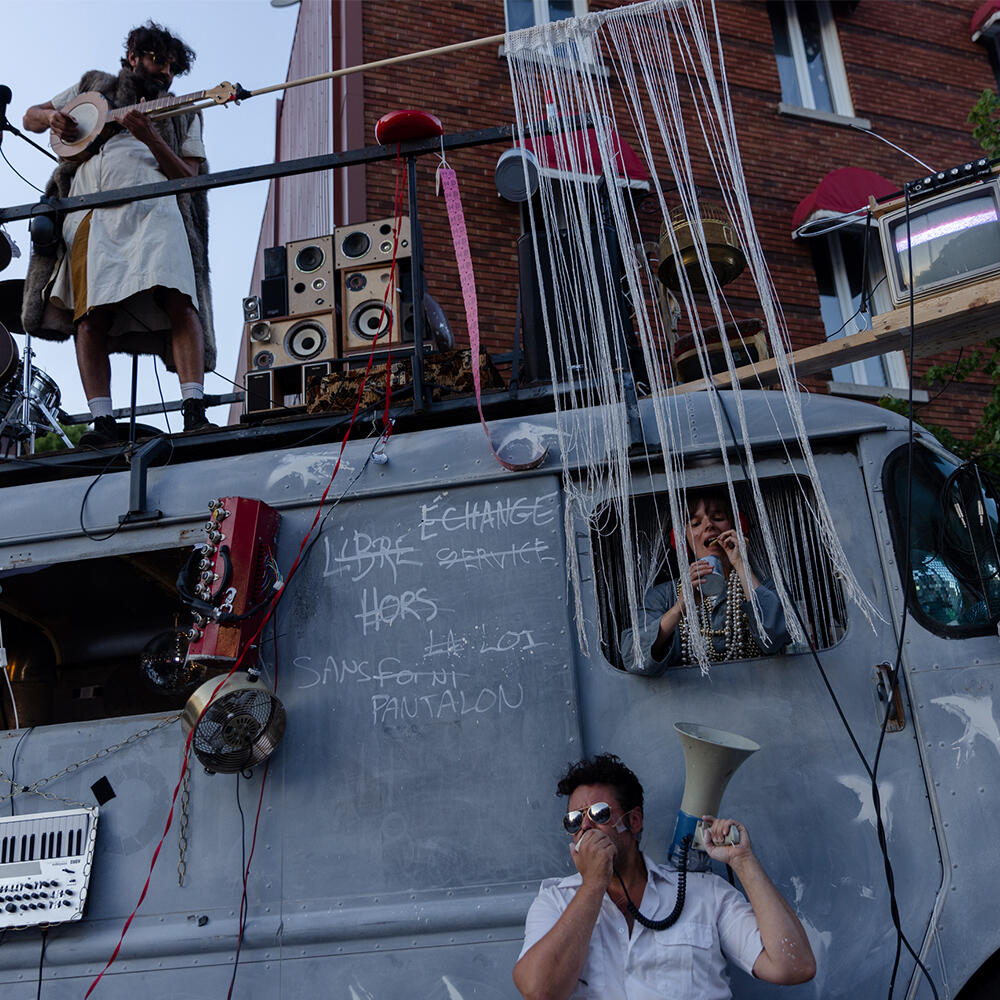
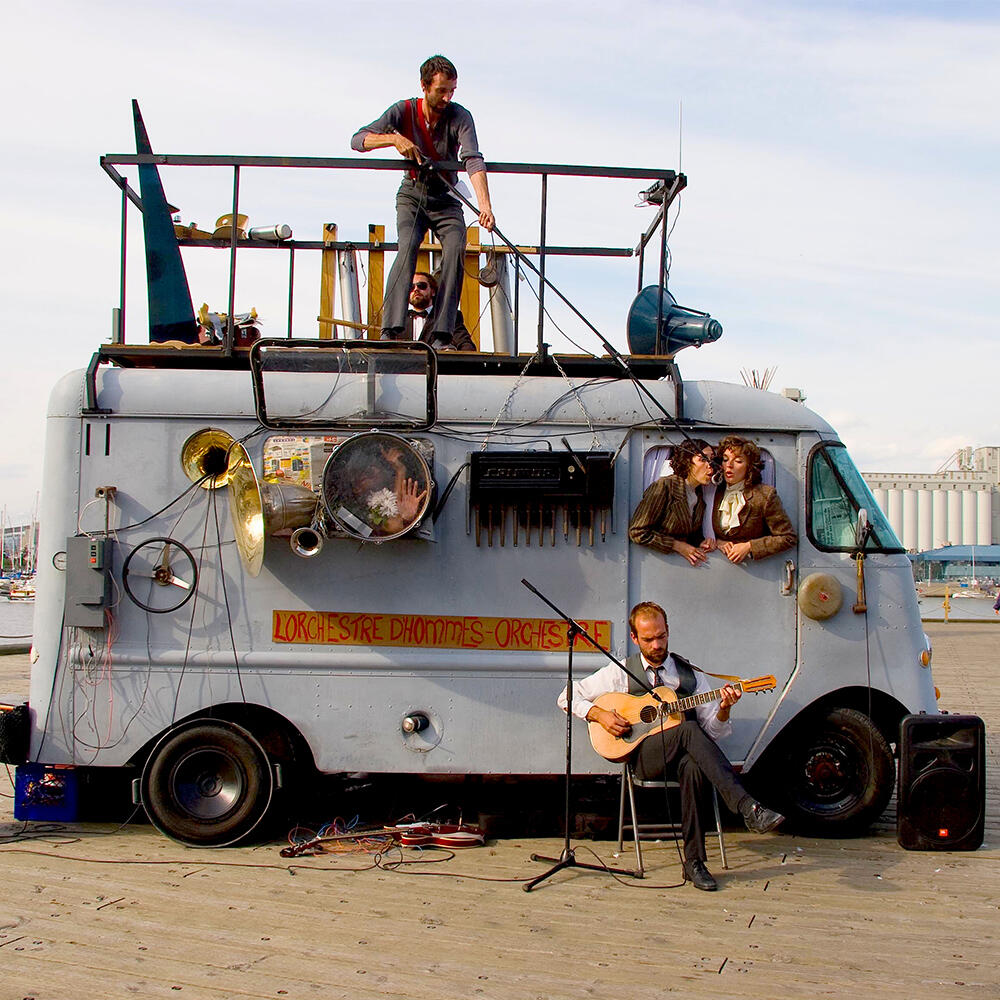
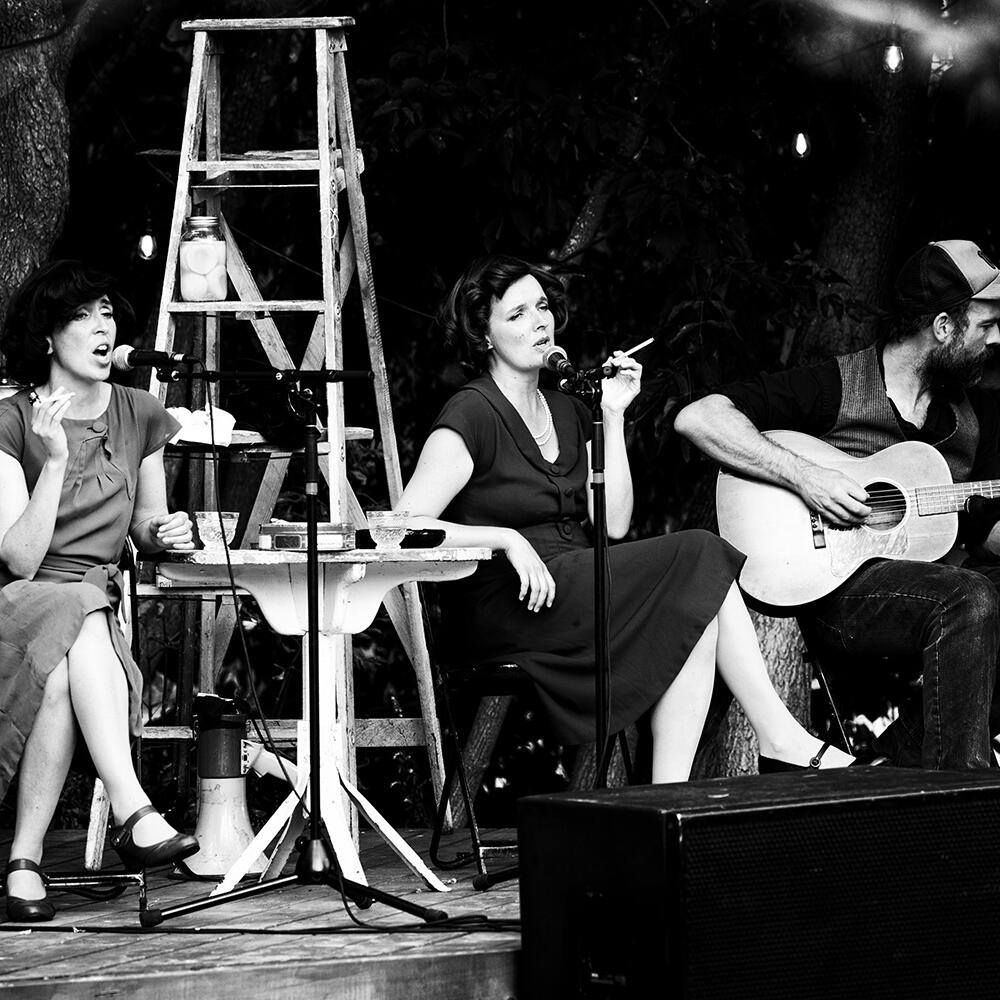
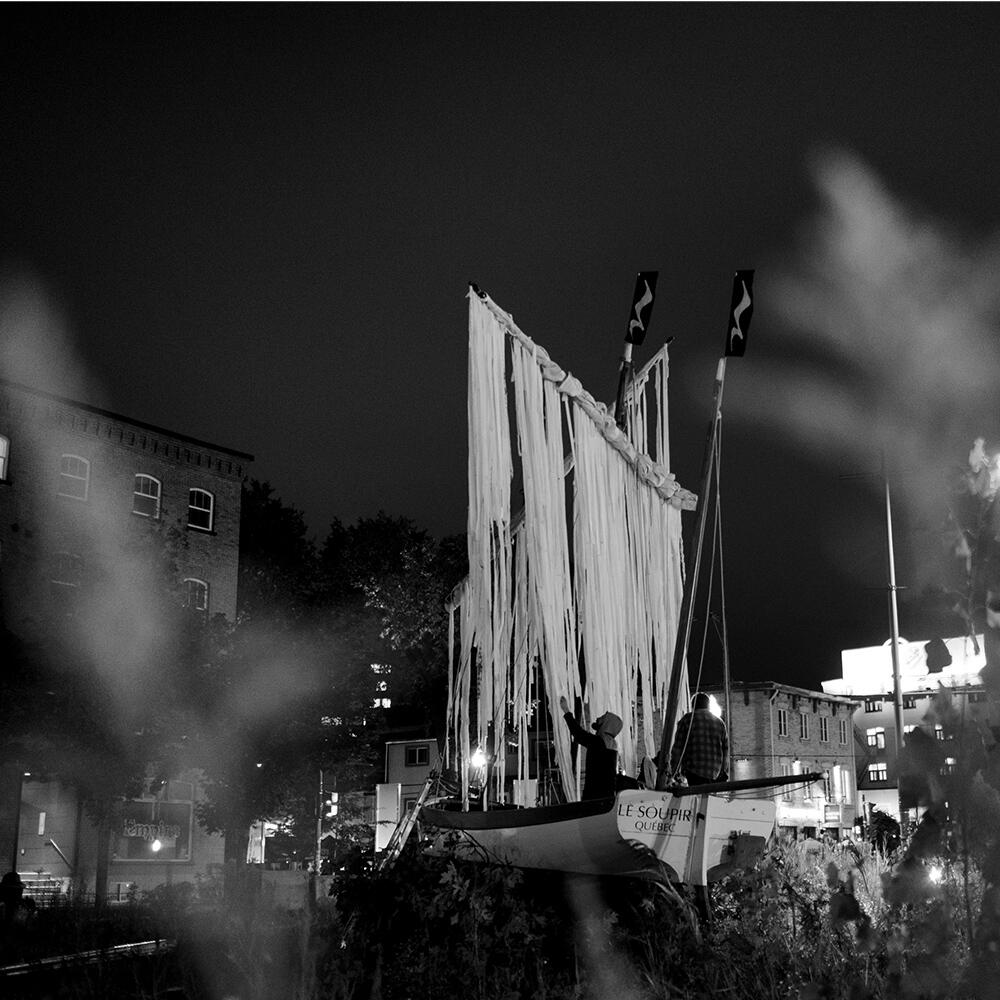
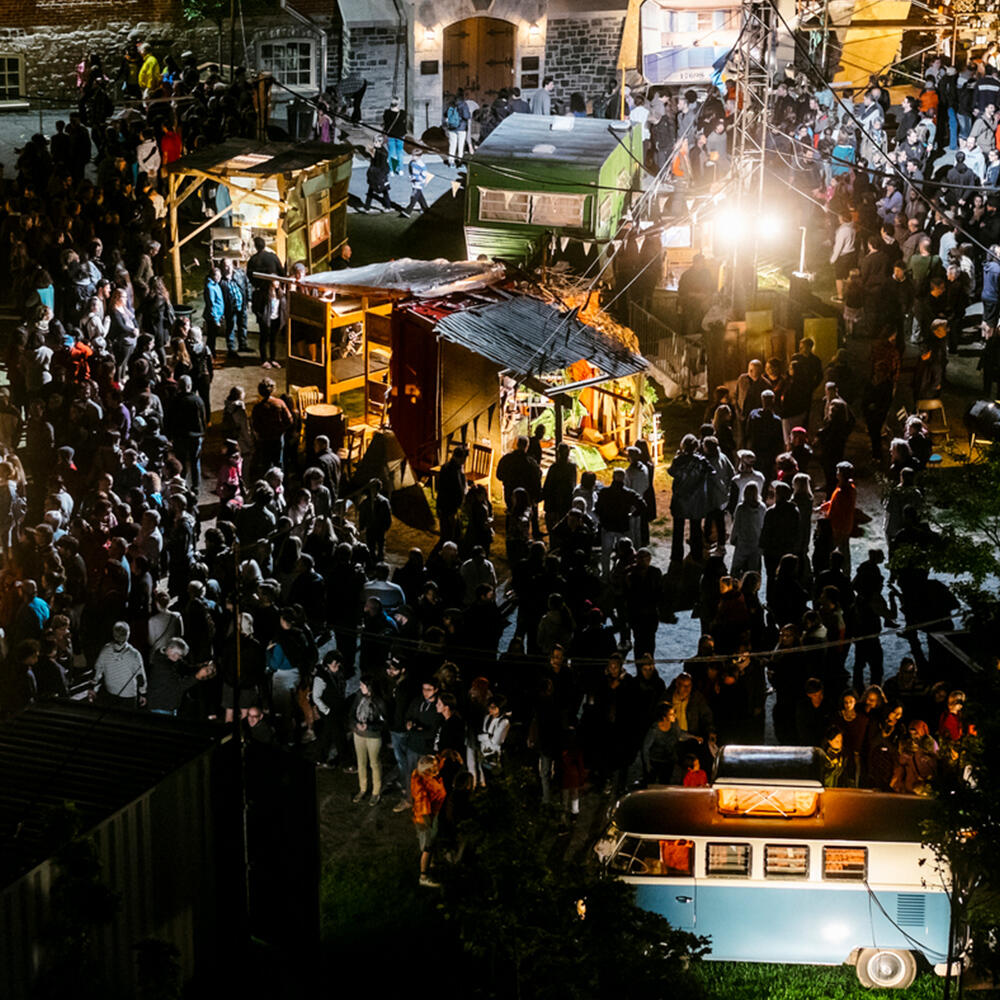
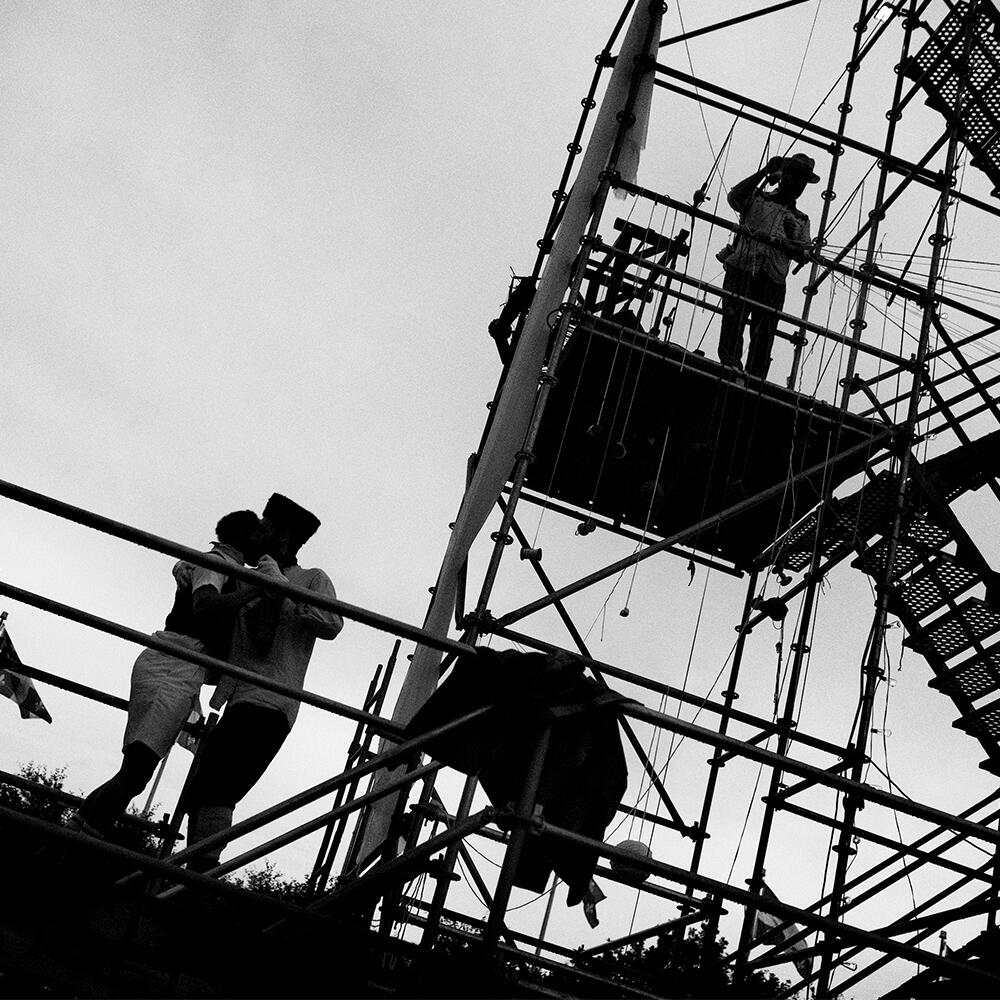
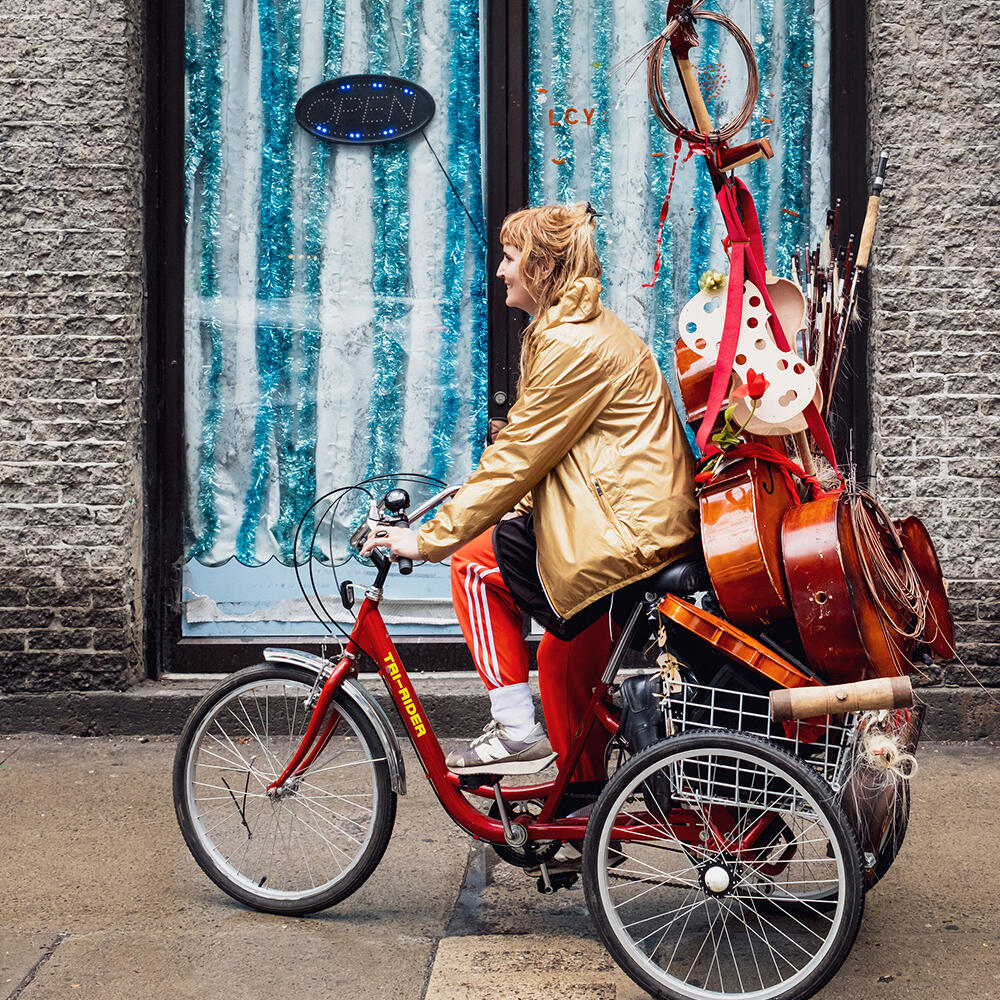
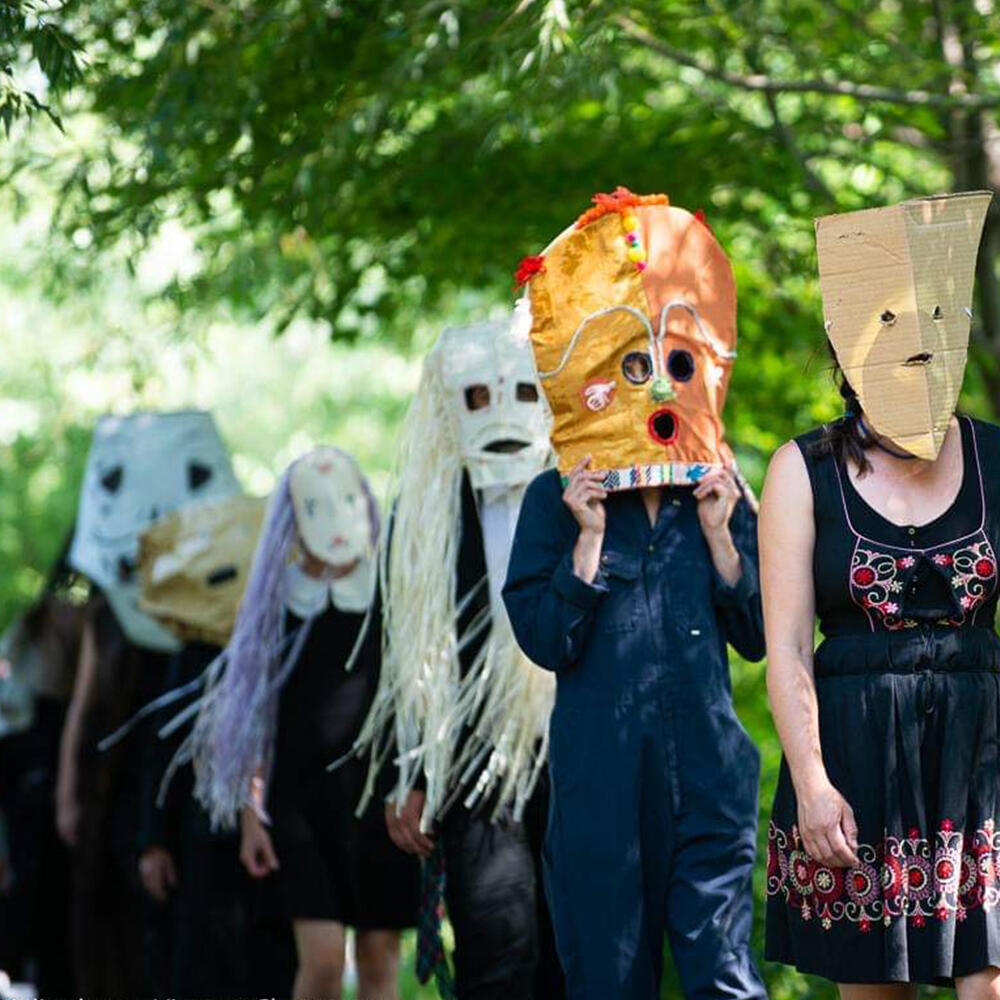

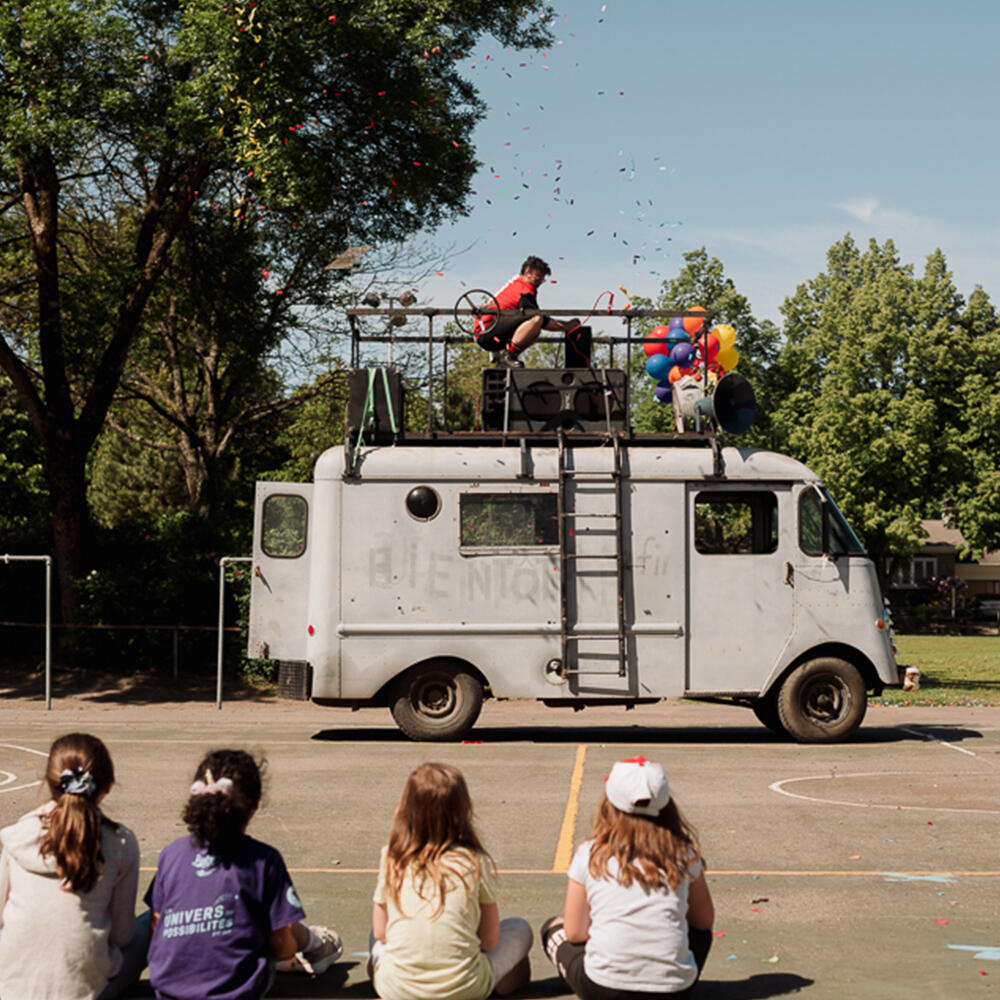
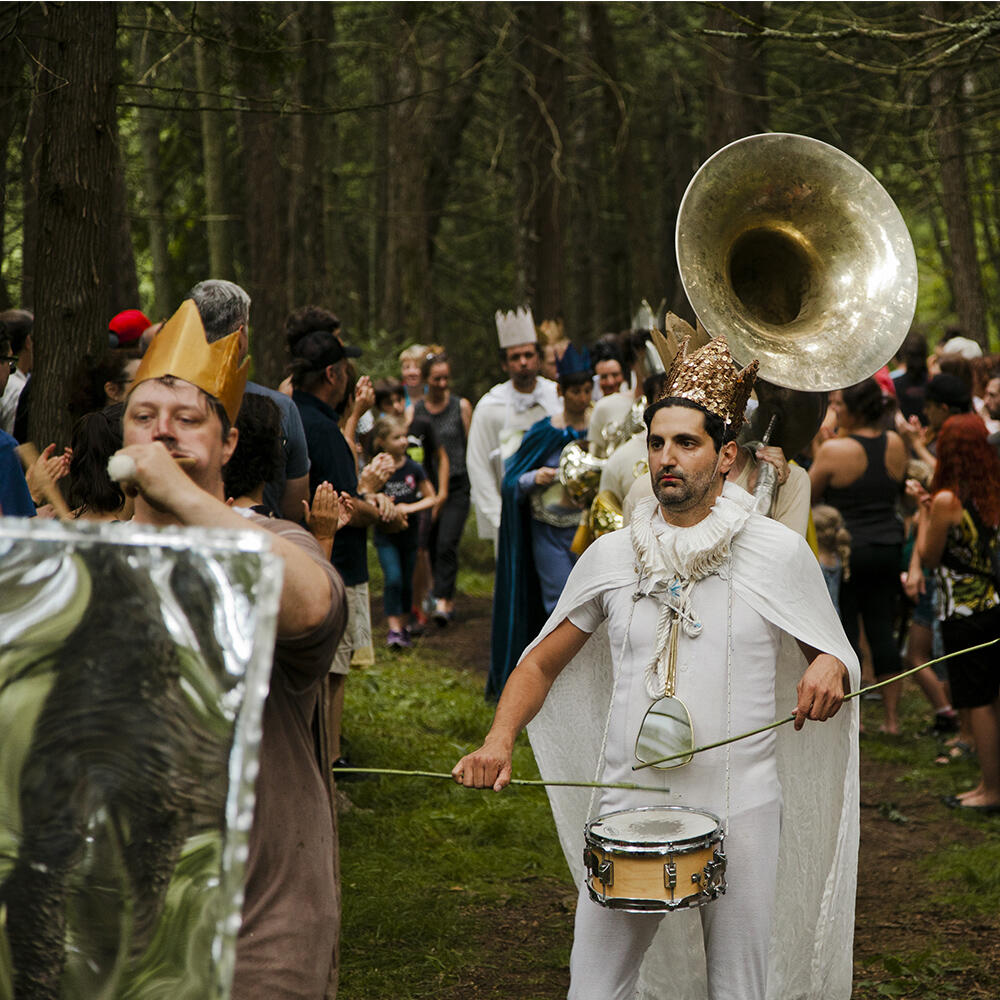
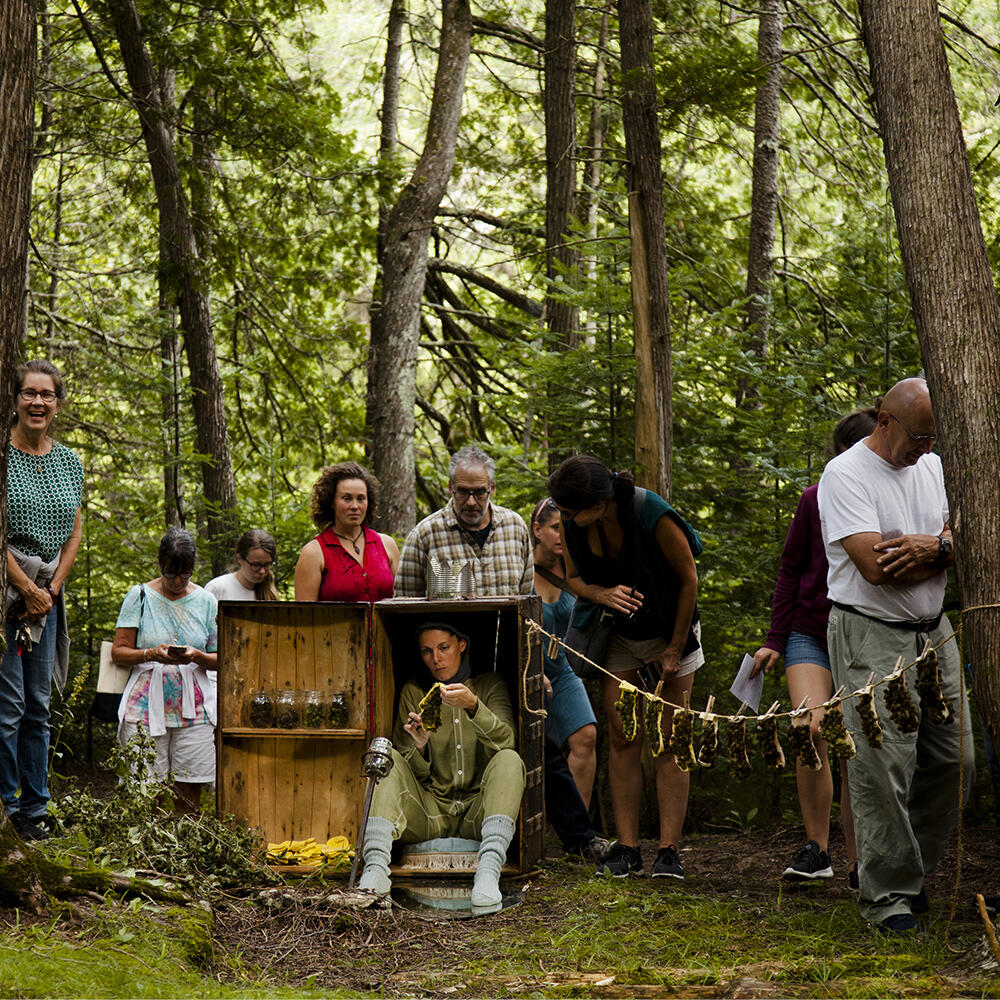
In 2002, when L’orchestre d’hommes-orchestres was founded in Quebec City, the group’s members had no idea they were preparing a veritable building site for the performing arts. Chameleon-like and undisciplined, the group began numerous collaborations with artists from various horizons (visual arts, music, theatre, dance, performance art…) under the banner of versatility and vocabulary renewal. Always striving to see what lies behind objects, and to pull the invisible strings, LODHO and its collaborators crossbred diverse languages to generate new art objects.
Symbolized by the figure of the one-man band, a kind of jack-of-all-trades with no specific talent apart from the ability to do everything at once, L’ODHO fiddled with just about everything, without the required knowledge or expertise. It was therefore necessary to find off-the-track solutions, to reinvent virtuosity in other ways. By adopting this do-it-yourself approach, the group moved away from uniformity and standardization towards free, open, inventive and deliberately disorderly art forms based on resourcefulness and intelligence.
L’ODHO enjoys taking risks, on stage or in public spaces, intentionally provoking accidents, accentuating imbalances, establishing a relationship with audiences that is at once raw and uncontrived. What is important is that each performance is an event that will never happen again.
The group has created more than 20 productions in a wide range of formats and scales, for both the stage and public space. Its productions have given rise to more than 750 performances in over 90 cities across some twenty countries in Europe, the Americas, Asia and Oceania. In 2013, L’ODHO received The City of Toronto Glenn Gould Protégé Prize by Robert Lepage and The City of Quebec Prize 2015.